Securing automation systems against cyber attacks.
Automation systems and cyber attacks
I4GES Team
6/1/20261 min read
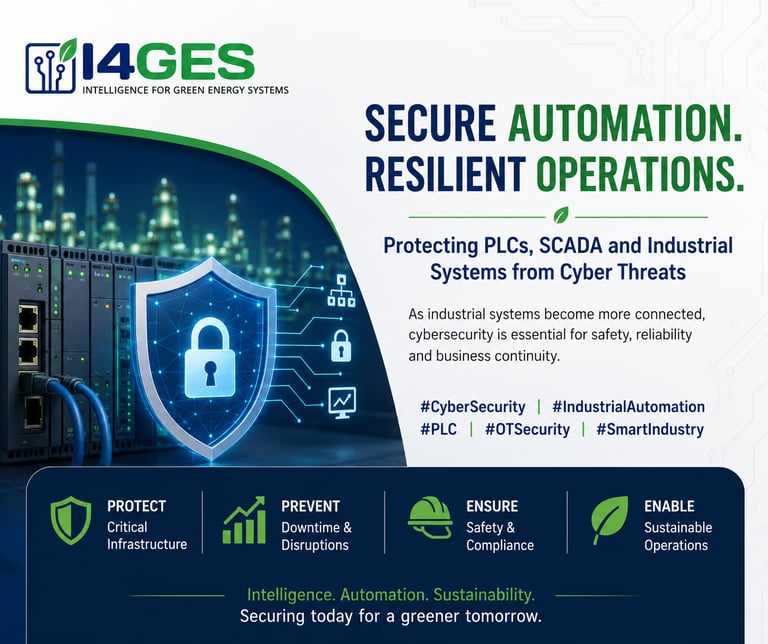
As industrial systems become smarter, more connected, and increasingly data-driven, cybersecurity is no longer just an IT concern — it is a core operational risk.
PLCs, SCADA systems, industrial IoT devices, and energy management platforms are now deeply integrated into production environments, utilities, and critical infrastructure. While this connectivity delivers massive gains in efficiency, visibility, and automation, it also expands the attack surface for cyber threats.
A successful cyberattack on industrial automation systems can lead to:
• Production downtime
• Equipment damage
• Safety incidents
• Energy disruptions
• Supply chain interruptions
• Significant financial and reputational losses
The reality is that many industrial environments were originally designed for reliability and operational continuity — not for today’s cybersecurity landscape.
That is why OT (Operational Technology) cybersecurity must become a strategic priority.
Key areas organisations should focus on include:
✔ Network segmentation between IT and OT
✔ Secure remote access policies
✔ PLC and firmware management
✔ Continuous monitoring and anomaly detection
✔ Employee cybersecurity awareness
✔ Zero-trust architecture for industrial environments
✔ Regular vulnerability assessments and patch management
Cybersecurity is no longer optional in industrial automation. It is now a fundamental part of operational resilience, sustainability, and business continuity.
The future of the smart industry depends not only on intelligent systems but on secure intelligent systems.